The Department of Visual Communication Design is structured to rethink the role of visual thinking in an increasingly complex and multi-layered world of communication. Today, visual communication extends far beyond aesthetic production; it operates at the core of information creation, meaning-making, and experience design. This transformation has both expanded the scope of design and deepened its responsibilities.
The department approaches visual communication design not merely as a tool, but as a way of thinking. It emphasizes the importance of not only solving problems but also redefining them through critical inquiry. In this sense, design is not positioned as a solely result-driven practice, but as a comprehensive process that includes research, analysis, and interpretation.
At the core of our educational perspective lies the integration of conceptualization and visualization. Students are encouraged to interpret information within different contexts, express it through appropriate media and tools, and develop a clear rationale behind their design decisions. This process fosters both individual production and collaborative learning experiences.
While closely engaging with technological developments, the department also underlines the relationship between design and its cultural, social, and historical contexts. Visual communication is understood not only as a technical skill but also as a critical practice. Students are therefore encouraged to engage with the world around them, interpret it, and contribute to it meaningfully.
Ethics and responsibility are fundamental values of the department. A strong awareness of the impact of design on individuals and society is cultivated, with sustainability, inclusivity, and sensitivity embedded as essential components of the design process.
The Department of Visual Communication Design aims not only to prepare students for existing professional fields but also to enable them to develop new forms of production, engage across disciplines, and build their own creative practices. In doing so, the department seeks to educate designers who do not merely adapt to change but actively interpret and shape it.
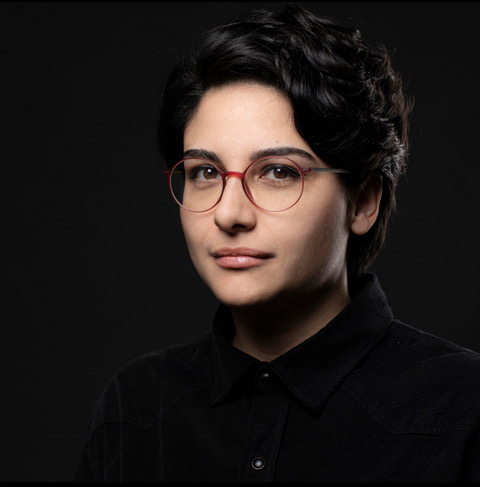 Head of Department
Faculty Member, PhD Dilek GÜRSOY
Head of Department
Faculty Member, PhD Dilek GÜRSOY